Palo Verde, La Loma and Bishop: An Unfinished Story
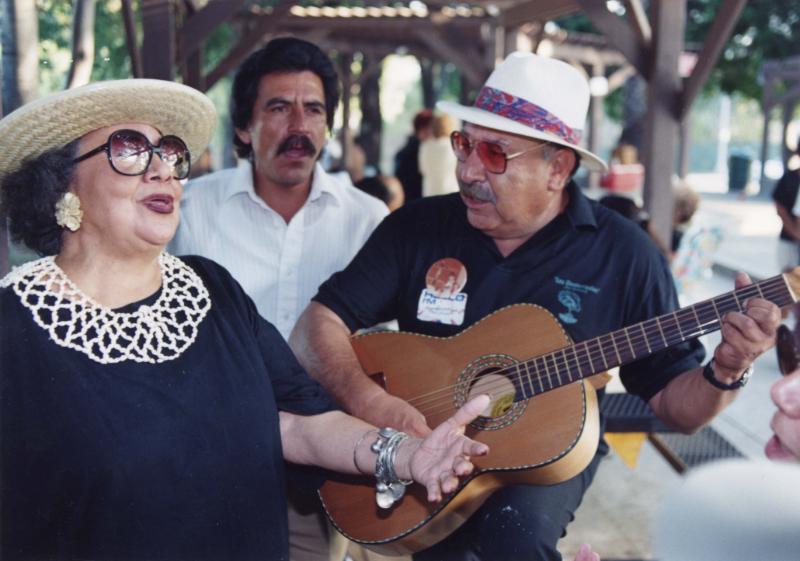
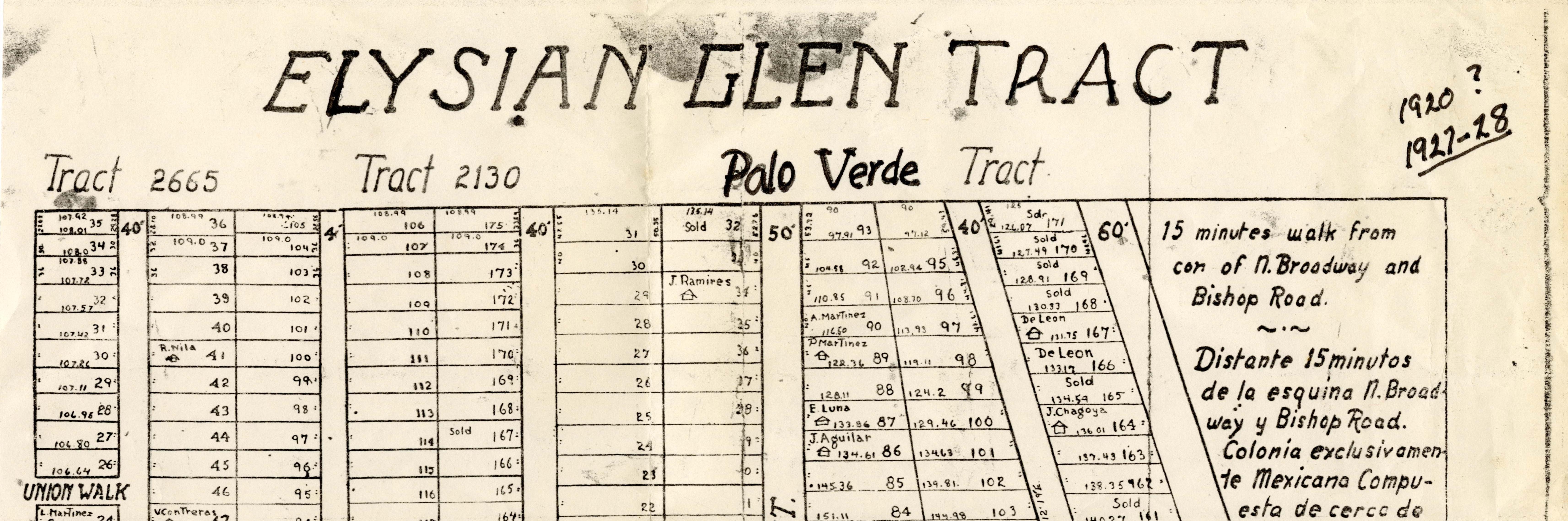
In 1950, over one thousand families lived in Palo Verde, La Loma and Bishop, the three neighborhoods that are now commonly referred to as Chavez Ravine in Los Angeles. The predominantly Mexican and Mexican American families began settling in the area during the 1910s since it was one of the few areas they could live in due to racial covenants. There, they formed a tight-knit community of homeowners and entrepreneurs. By the 1930s, the area had its own main street with grocery stores, schools, Catholic and Free Methodist churches, hair salons and community spaces. In other words, the community had reached a measure of self-sustainability and autonomy.
In January of 1950, residents received notice their homes would be cleared for the construction of a public housing project called Elysian Park Heights. The Housing Authority designated Chavez Ravine, along with ten other Los Angeles areas as blighted slums. This designation was informed by racial assumptions about Mexicans. Residents continue to contest this designation to this day. For housing official Frank Wilkinson and architect Richard Neutra, high-rise and low-rise public housing apartment buildings were a better use for the area. Housing officials invoked the power of eminent domain against residents who refused to accept the city’s appraisal of their home. As a result, the majority of families were removed from the three neighborhoods by 1952.
Shortly after, public housing came under fire because of increased public fears of “creeping socialism.” Los Angeles Mayor Poulson scrapped the Elysian Park Heights and the future of the area was uncertain. By this time, most of Chavez Ravine was vacated except for a couple dozen families. These families hoped the elimination of the public housing project would save their homes but city officials had something else in mind—the arrival of professional baseball to Los Angeles. Shortly after in 1957, the city negotiated a sweetheart deal with the Brooklyn Dodgers and the destroyed barrios became home to Dodger Stadium. Two years later and a few months before the Los Angeles Dodgers broke ground for their stadium, Los Angeles sheriff’s deputies came to the home of one family, the Arechigas, to forcibly evict them. Television crews arrived and the two-hour melee was broadcasted across the nation. In one shocking scene, sheriffs carried Aurora Vargas out of her home against her will, reopening the deep wounds of racism that for some residents have reverberated over the decades.
The massive transformation of Palo Verde, Bishop and La Loma over the course of the 1950s represents one of the most egregious examples of racist urban renewal practices and the displacement of communities of color.
Los Desterrados (The Uprooted) / Palo Verde- Loma-Bishop (Cultural Historical) Association (PVLBCHA)
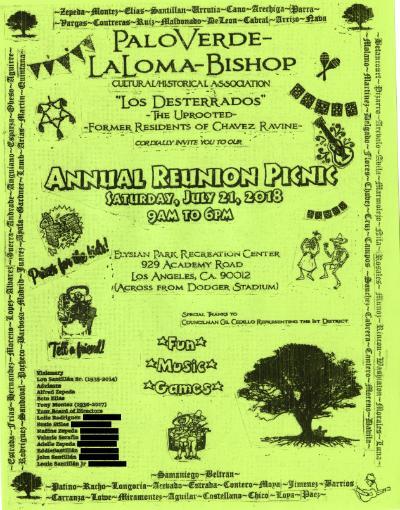
After the city displaced them from their homes, residents maintained their friendships and sought to preserve what was special about their communities. They held dances and get-togethers as early as 1970. Then, in February of 1975, Louis Santillan and Gene Cabral held the first reunion at the Los Angeles Police Academy. They named themselves Los Desterrados, or the Uprooted, a term that sought to capture the feeling of loss they continued to experience decades after their removal. The Los Desterrados committee had established an annual picnic reunion as a way to reunite with their old neighbors and preserve their memories. Founding committee members included Father John Santillan, Rose Marie Lopez, Sal and Marge Veas, Mario and Ofelia Zepeda, Tony and Baby Carrasco, Nestor Novoa, Beto Elias, Tony Montez, Cano Cervantes, Eddie Cano, Fito Esquivel, and Alfred Zepeda. They eventually established the Palo Verde-Loma-Bishop Association with Lou Santillan as President and began meeting at the Elysian Park Recreation Center. As part of a larger vision, Santillan and Los Desterrados sought to establish a memorial at the Northwest corner of Park Row and Academy Road where they could honor their parents that settled in the old neighborhood, feel a sense of belonging and establish a legacy so that their children could have a sense of their own historical background. Today, Los Desterrados have reignited their goal of establishing a monument that honors all of the families that once lived there. Over forty years later, Lou Santillan’s son, Eddie Santillan, continues his father’s work and Los Desterrados continue to meet in their childhood playground. Over food, photos and games, residents spend the day reminiscing with longtime friends, building community and cultivating an appreciation of history in their own children, grandchildren and great grandchildren. Chavez Ravine: An Unfinished Story is indebted to the vision of Louis Santillan and the incredible work of all involved in Los Desterrados.