Information for Potential Donors
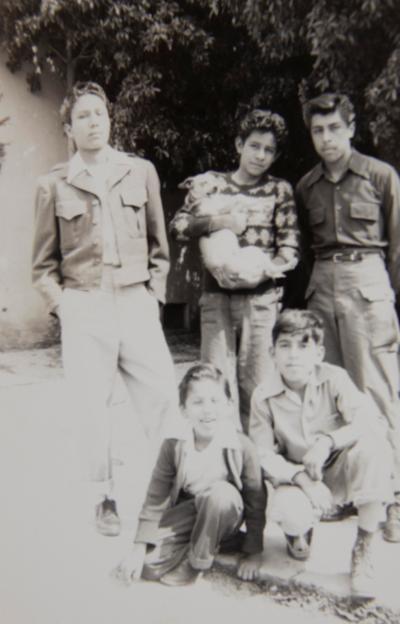
Chavez Ravine: An Unfinished Story is a community-curated archive, meaning that it is built through the contributions of images and stories by the community themselves to document their history. Residents of the Palo Verde, La Loma, and Bishop neighborhoods and their descendants tell their stories by sharing items such as family photographs and documents. Donors play a vital role in creating these records and making them accessible for research.
Why Choose to Contribute?
A major part of the Chavez Ravine: An Unfinished Story project is a community-curated archival collection within the collections of the William H. Hannon Library's Archives and Special Collections department at Loyola Marymount University. A community-curated archival collection documents the stories of a group of people sharing common interests and social, cultural, and historical heritage. Chavez Ravine: An Unfinished Story goes beyond the traditional practices of professors, archivists and librarians to center a collaboration with community partners who provide lived experience and insights.
List of possible items to donate:
Below are some examples of items that you may want to donate to the collection. If you are interested in donating something that is not on this list, we invite you to fill out the Interest Form with more information. We are committed to learning from you.
- Photographs (with subjects and locations identified)
- Films, videos, and audio tapes (including identifying information)
- Scrapbooks and photo albums
- Letters and emails
- Memoirs and reminiscences
- Diaries and blogs
- Professional papers
- Genealogical information
- Speeches and lectures
- Articles and essays
- Subject files
- Legal documents
- Minutes and reports
- Brochures and fliers
- Awards and certificates
- Websites
We accept both digital and physical items to contribute to this project. If you are interested in donating digital items (so your family keeps the original items), we have a few options to either help you with the digitization or advice on the next steps. We are dedicated to taking care of these items for life with climate controlled archival storage for physical items and a preservation archive for digital storage. We invite the donation of physical and digital archival materials in all languages.
Deed of Gift
Once you are ready to donate your items to Loyola Marymount University, we will provide you with a deed of gift to document the gift. Donations must be accompanied by a deed of gift signed by both the donor and the LMU library in order for us to add your donation to the collection. The Deed of Gift is a contract between the contributor(s) and Loyola Marymount University. This agreement specifies the relationship between the contributor(s) and the William H. Hannon Library to carry out its mission and responsibilities. One of the most significant parts of the Deed of Gift is that the contributor(s) gives the institution the power to manage, provide access to display, teach with, and preserve the donated archival materials. The Deed of Gift explains what the contributor and the university can and must do. It outlines each person's rights and responsibilities in a clear agreement. Chavez Ravine: An Unfinished Story is a collection shaped by the community. The university can share the collection with people around the world, but if you own the copyright to the items you donate, you can keep your copyright ownership. That means the university can show your materials, but you still have the right to control how they're used and who can use them.
Copyright
We believe it’s important that you have the option to keep the copyright to your donated items. Many of our donors choose to keep their copyright because they want to have a say in how their personal or family histories are used, especially when it comes to publishing, filming, exhibiting, or using materials beyond education or private study.
If you keep the copyright, Loyola Marymount University will not grant permission for others to use your materials in public projects. Instead, we will direct anyone who wants to publish or reuse your items to contact you (or someone you choose). This means you get to decide if your materials can appear in books, documentaries, or other creative works.
However, it’s important to know that Loyola Marymount University cannot prevent people from taking screenshots or posting images of your materials on social media or elsewhere online. While we require users to get permission from the copyright holder before publishing, the university is not responsible for any misuse or copyright violations by others.
Interested in donating to the Chavez Ravine: An Unfinished Story’s community-curated archive?
When the Archives and Special Collections department at the William H. Hannon Library at Loyola Marymount University receives donations, we commit to preserving the materials and making them accessible to the public.
If you have any questions or concerns, please email the project leaders or fill out the Interest Form, and we’ll get back to you.
How long will it take for the materials I donated to be uploaded to the digital collection?
When Archives and Special Collections department at the William H. Hannon Library at Loyola Marymount University receive donations, we commit to taking care of and making the materials accessible. To do this, we have practices in place that might slow down the ability to make all the materials accessible right away. We are working diligently to make all the Chavez Ravine community members' materials available as fast as we can, but if you have questions or concerns, please email project leaders or fill out the Interest Form and we will be in touch.
Interested in donating materials but your family did not live in the Chavez Ravine neighborhood?
The Archives and Special Collections department at the William H. Hannon Library at Loyola Marymount University collects and preserves rare and historical materials in a variety of formats, subjects, and time periods. One of our focus areas is the history of Los Angeles.
If you’re interested in donating materials or have questions about your archive, please contact us at CRUS@lmu.edu.